Post-Tension Cable Repair | /services/cut-post-tension-cable-repair-dallas/
What Just Happened to Your Slab - and Why the Project Stopped
A cut post-tension cable is a structural event. The project stops until it's addressed.
You're mid-renovation. A plumber is on-site. The drill hits something it shouldn't. Work stops immediately - and now you have two problems instead of one.
Here's what most homeowners don't realize in that moment: the cable didn't just get nicked. It got severed. And a severed PT cable - a high-strength steel strand that was under thousands of pounds of tension - releases that energy instantly. The concrete it was compressing is now carrying more load on fewer cables. That matters.
The good news? A cut post-tension cable is repairable. Accidental cable severance - a PT cable cut during drilling, core boring, or saw-cutting through a concrete slab - is one of the most common emergency calls we receive in the DFW area. It has a defined repair path. What you do in the next hour shapes how smoothly the rest of the process goes.
Don't let the contractor continue. Don't pour concrete over the opening. And don't let anyone leave the site until the cut is documented. That documentation becomes your protection.
Cast Iron Pipes, Slab Drilling, and Why This Happens So Often in Dallas
Dallas has the perfect storm for cut-cable accidents - aging pipes, active renovation, and no mandatory pre-scan requirement.
Thousands of Dallas homes were built between the 1970s and early 1990s. Two things are almost always true about those homes. First, they sit on post-tension slabs. Second, they have cast iron drain lines running directly beneath those slabs.
Cast iron drain line - an older plumbing pipe material common in Dallas homes built before the 1990s - cracks, corrodes, and root-clogs at a predictable rate. When it fails, a plumber has to get through the slab to access it. That means core drilling or saw-cutting through concrete.
The standard of care before any slab penetration is a GPR pre-scan - a Ground Penetrating Radar scan that maps the exact location of PT cables before the first drill bit touches concrete. When that scan doesn't happen, the drill goes in blind.
In Lakewood, East Dallas, Oak Cliff, and Uptown - neighborhoods with heavy concentrations of that exact housing vintage - this scenario plays out regularly. It's not rare. It's not unusual. And it's entirely preventable, which is precisely why the documentation that follows an accident matters so much.
Active Job Site, Contractor Standing There - Here's the Sequence That Follows
Every cut-cable call gets documented first. That record is yours, not the contractor's.
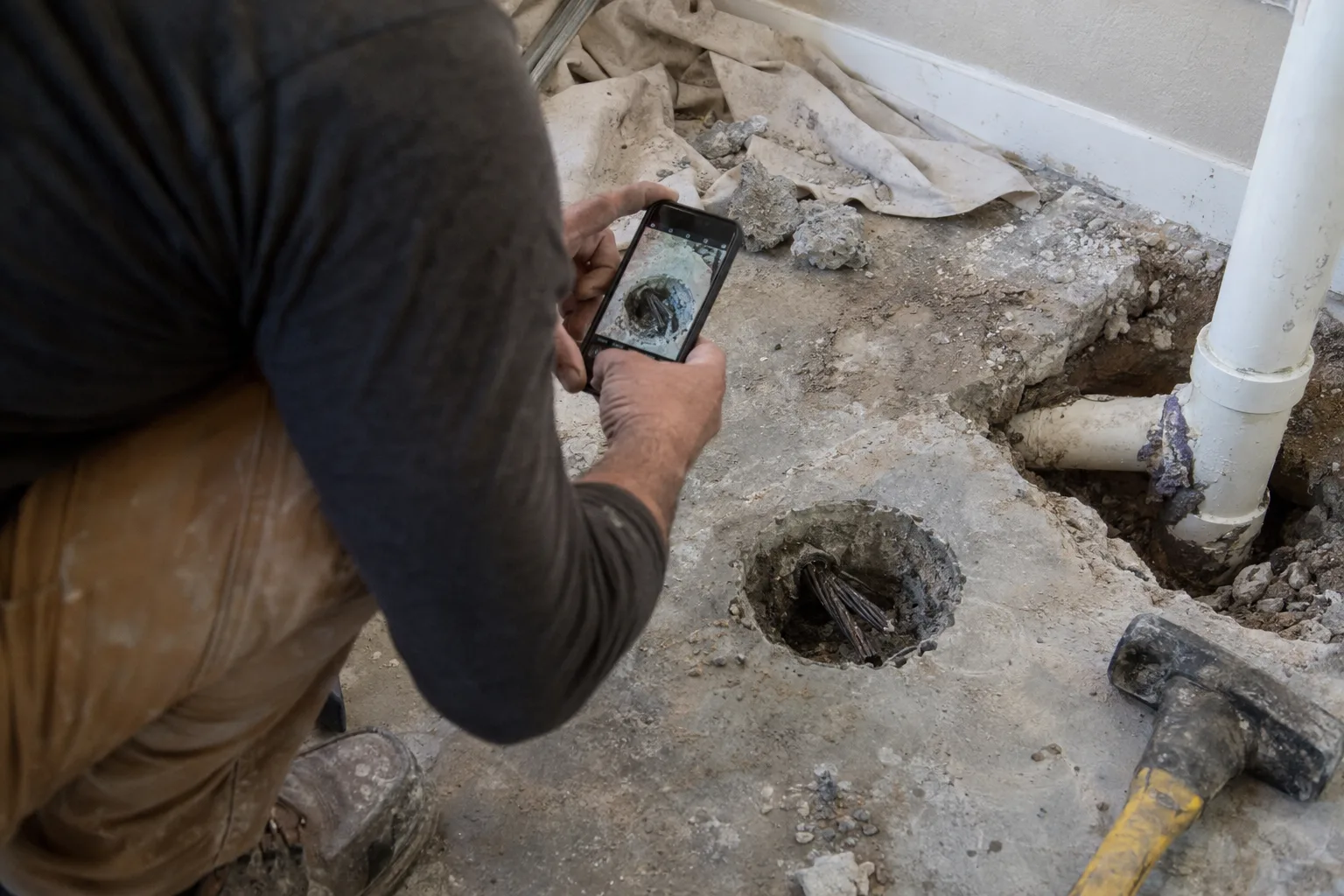
I've walked into a lot of active job sites where a cable has just been cut. The homeowner is rattled. The plumber is standing back from the opening, unsure what to say. The renovation timeline is already in question. The first thing I do isn't pull out tools - it's pull out a camera.
Before any repair work starts, we photograph the cut location, the exposed cable ends, the condition of the surrounding slab, and the drill or saw entry point. That's your renovation accident documentation - a timestamped, photographic, and written record of exactly what the slab looked like at the moment of the accident.
Why does that matter? Because if you later pursue a liability claim against the plumbing contractor, or file a homeowner's insurance claim for structural damage, that record is the difference between a clear claim and a dispute about what actually happened. Contractor liability - the legal responsibility a plumbing or construction contractor may carry when their work damages a structural component - is much easier to establish with photos taken before anyone disturbs the site.
After documentation, we assess the cable condition. Most accidental cuts happen mid-span - at a point between the cable's two anchor ends. A mid-span cut is a geometrically and mechanically different repair from an anchor-end failure. It requires a cable splice repair, which means inserting a repair coupler or splice fitting at the cut location and restoring the strand to its original tension specification.
The plumber can often proceed with their drain line work once we've secured the cable ends. The two repairs don't have to stop each other. We coordinate so the project moves forward - with the structural side handled correctly.
You Can Protect Your Claim and Get the Project Moving Again
Documenting first and repairing second keeps every option open for you.
One of the most common questions we hear after a cut-cable call: "Do I have to pause everything?" Not necessarily. But the sequence matters.
The documentation has to happen before the opening is disturbed further. After that, the plumber can typically continue their drain work while we prepare the cable repair. The two scopes don't have to block each other - they just have to be coordinated.
Here's how we handle the liability side: we provide you with a full written condition report after documentation is complete. That report describes the cable's pre-repair state, the cut mechanism, and the surrounding concrete condition. If your insurance carrier or an attorney needs to understand what happened, that report speaks for itself.
The plumbing contractor may also carry general liability insurance that covers accidental structural damage. Having independent documentation from a PT specialist - not just the contractor's own account - strengthens your position significantly.
Cut-Cable Repair Standards - From Documentation Through Splice Completion
Every cut-cable repair follows the same documentation-first, tension-verified sequence.
The standards we apply to cut-cable repairs are specific. No two of these jobs are identical, but the quality benchmarks don't vary.
- GPR scan of the full affected zonebefore any additional slab penetration - even if the drill has already cut one cable, we confirm the layout before anything else is at risk
- Photographic documentation packagecompleted before repair work begins - timestamped, labeled by location, provided to the homeowner
- Cable end condition assessmentcorroded, work-hardened, or frayed ends require additional preparation before splicing
- Cable splice repair using rated repair couplersthat meet the original ASTM A416 strand specification - the standard for the steel strand used in PT cables
- Tension verification after splice installationthe cable is re-stressed to the original design load, not an approximation
- Concrete pocket restorationafter cable work is complete - the slab edge is returned to its pre-repair condition
- Written completion reportprovided at job close - usable for insurance, lender, or disclosure purposes
No shortcuts on the documentation end. That record is as important as the repair itself.
Right Now, Next 24 Hours, Repair Day - Your Step-by-Step Timeline
The first hour after a cut cable is the most important - here's exactly how it unfolds.
Right Now: Secure the Site
Stop all drilling and saw-cutting immediately. Mark the opening so no one steps into it. Keep the area clear and undisturbed. Do not pour concrete, pour self-leveling compound, or cover the opening in any way. Take your own photos if you have a phone available - capture the entry point, the opening, and the exposed cable ends.
Contact us directly at info@posttensioncablerepair.com with your location and a brief description of what happened. Include a photo if possible. We respond to cut-cable situations across the Dallas area quickly - same-day response is the standard for active job site calls.
Next 24 Hours: Documentation and Assessment
We arrive on-site and complete the full documentation package before any repair work begins. We assess the cable condition, measure the cut location relative to the anchor ends, and confirm whether a standard cable splice repair is viable or whether the cable requires a full section replacement.
We also provide you with a written condition summary at this stage. That summary is your record of the pre-repair state - useful immediately if you're contacting the plumbing contractor's insurance carrier.
Repair Day: Splice, Tension, Restore
The cable splice repair is completed at the cut location. The cable is re-stressed to its original design specification. The slab pocket is restored. A completion report is generated and provided to you before we leave the site.
If the plumber needs to complete their drain line work after the cable is repaired, we coordinate the handoff directly. The goal is a fully finished slab - plumbing and structural - with documentation that covers both scopes.
Cut-Cable Calls Answered Across Dallas Renovation Corridors
We respond to cut-cable repairs across the full Dallas-Fort Worth renovation market.
Our cut-cable response area covers the neighborhoods where this happens most: East Dallas, Lakewood, Oak Cliff, Uptown, Irving, Garland, Mesquite, and Grand Prairie. We also serve the broader DFW metro including Fort Worth, Arlington, Plano, McKinney, Richardson, Carrollton, Farmers Branch, and Duncanville. Outlying calls from Denton, Waco, and Tyler are within our service range.
Call Before Anyone Touches the Site Again
One call stops the clock on liability and gets the repair started the right way.
A cut post-tension cable on an active job site is a timed situation. The longer the opening sits undocumented, the harder it becomes to establish a clear chain of events if a liability dispute follows.
Reach out to us at info@posttensioncablerepair.com right now - before the contractor does anything else to that opening. Tell us where you are and what happened. We'll confirm the fastest path to documentation and repair.