Cost ranges broken down by repair type so you can evaluate any quote you receive.
Why Two Homes With the Same Problem Can Get Quotes That Differ by Thousands
Post-tension cable repair quotes vary because the work itself varies - sometimes dramatically.
Two homeowners in Dallas each receive a report: "broken post-tension cable." One gets a quote for $800. The other gets a quote for $4,200. Both quotes might be entirely legitimate.
Here's what most homeowners don't realize about PT cable pricing: there is no flat market rate for this work. The price is a function of five specific variables. Where the cable broke. How many cables are affected. How difficult it is to access the failure point. Whether the anchor hardware needs replacement. And how much concrete has to be opened and restored.
A quote without a breakdown of those variables isn't a quote - it's a number. This page explains what each variable means and how it moves the total price, so you can evaluate any figure you receive with confidence.
How DFW's Housing Stock and Soil Conditions Push Repair Costs Up or Down
Dallas-Fort Worth's Blackland Prairie clay creates repair conditions you won't find anywhere else in the country.
DFW sits on highly expansive Montmorillonite clay - a soil type that shrinks dramatically during drought and swells hard when wet. This cyclical movement puts continuous stress on post-tensioned slabs. The result: more cable failures per slab, more failures at the anchor ends where hardware is already stressed, and more cases where one visible failure is accompanied by adjacent cables also showing wear.
That matters for cost estimates in a direct way. A single-cable repair on a stable site in a newer Plano subdivision involves different scope than the same repair on a 1980s slab in Irving where the soil has moved through ten drought cycles. The older the slab, the more likely the repair involves degraded concrete at the pocket, corroded anchor hardware, and multiple cables close to the failure threshold.
Here's the practical implication: a quote that accounts for DFW soil conditions is a more accurate quote than one that doesn't.
Anchor-End Failure vs. Mid-Span Break - How Location Alone Changes the Price
Where a cable breaks determines more of the repair cost than almost any other factor.
I've walked through jobs where two slabs, same age, same neighborhood, same number of cables affected - came in at prices that looked nothing alike on paper. The difference was location of failure.
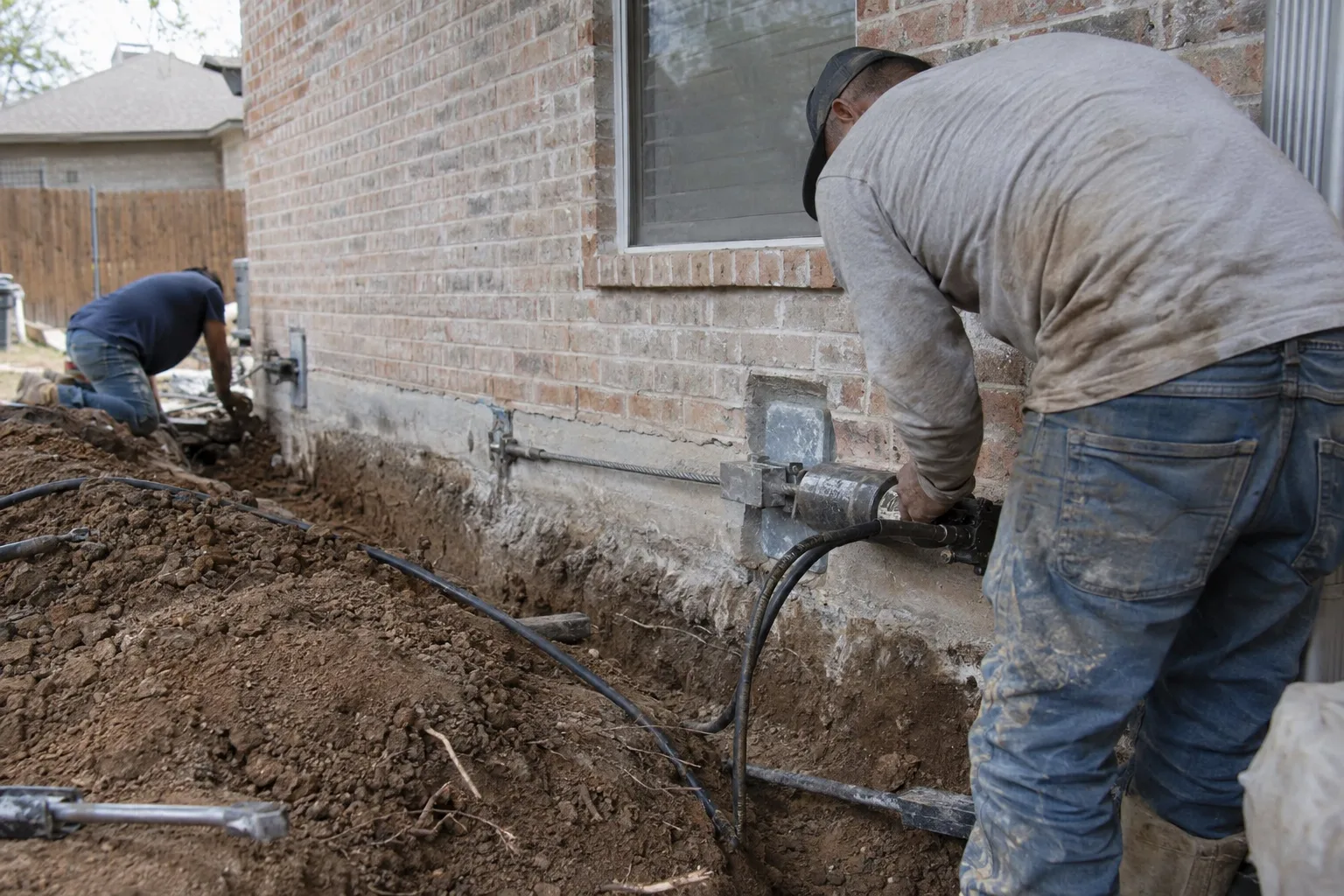
A mid-span cable failure - meaning a break that occurs along the length of the cable between its two anchor ends - is typically the most accessible repair scenario. Access is opened at the slab edge, the damaged section is located and spliced or replaced, and concrete restoration is straightforward. These repairs generally fall in the lower portion of the cost range for this type of work.
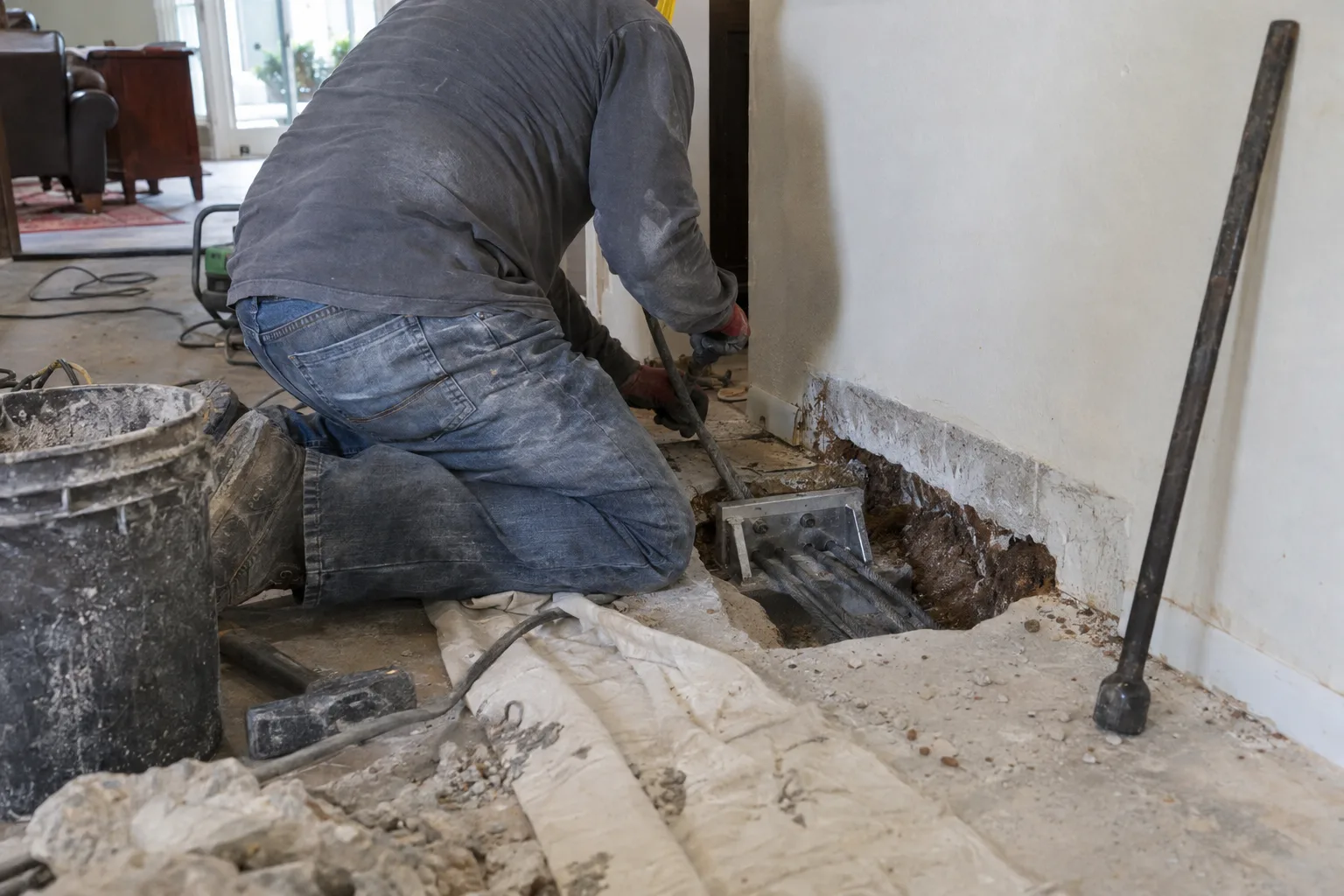
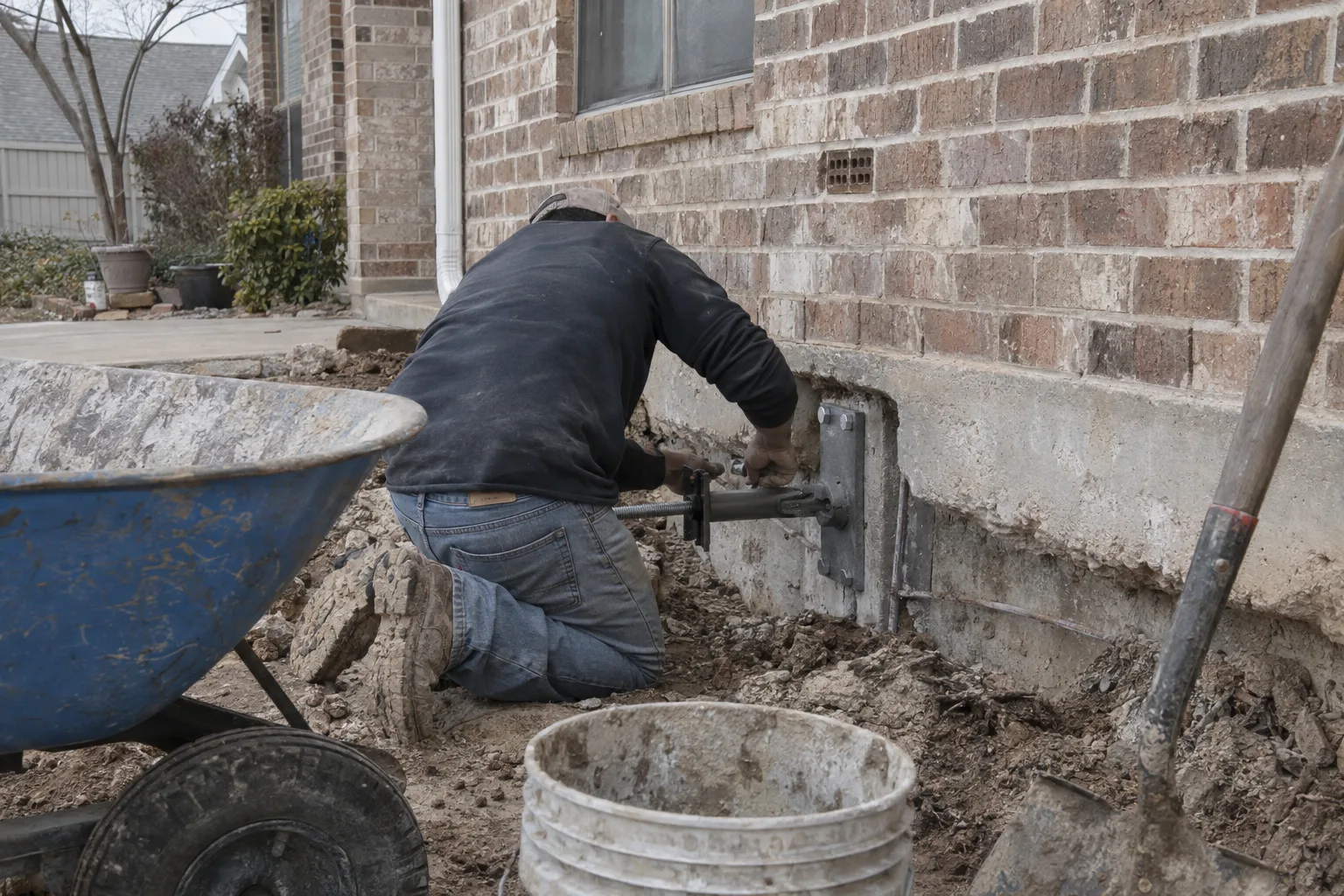
An anchor-end failure is a different job entirely. The live end or dead end hardware - the anchor head that holds tension at the slab edge - has corroded, pulled through, or failed. That hardware has to be excavated, removed, and replaced with compatible components. The concrete surrounding the anchor pocket is often deteriorated and must be fully restored to spec. The cable may need to be re-stressed from the repaired end using hydraulic equipment.
The labor, material, and time involved in an anchor-end failure can run two to three times the cost of a comparable mid-span repair. If a quote doesn't specify which type of failure is being addressed, ask. That single clarification changes the entire price conversation.
Here's a general range breakdown by repair type to give you a working frame of reference:
| Repair Type | Typical Range |
|---|---|
| Mid-span cable repair (single cable) | $800 - $1,800 |
| Anchor-end repair (live end or dead end) | $1,500 - $3,500 |
| Full cable replacement (anchor to anchor) | $2,000 - $5,000+ |
| Re-stressing (intact cable, tension loss only) | $400 - $1,200 |
| Pocket/anchor hardware only (no cable work) | $300 - $900 |
These ranges reflect actual DFW market conditions. Final cost depends on the variables covered below.
Understanding the Variables Puts You in Control of the Conversation
You don't need to be a PT specialist to ask the right questions about a quote.
A contractor who understands this work will answer these five questions without hesitation. Number of cables affected. Exact failure location - mid-span or anchor end. Access method - exterior slab edge, interior floor, or both. Concrete restoration scope included. Whether an engineering consult is part of the work or a separate cost.
If those answers aren't in the quote you received, you're comparing apples to unknowns. The goal of getting multiple quotes isn't just to find the lowest number - it's to understand what each quote actually covers. A higher number that includes concrete restoration and anchor hardware replacement may represent better value than a lower number that doesn't.
We've had customers come to us after accepting a quote that didn't include pocket restoration. The cable was fixed. The anchor pocket was left open. Six months later, water infiltration started the corrosion process again. The cheapest option turned out to be the most expensive outcome.
How We Build a Quote - Variable by Variable, in Writing
Every quote we provide is itemized - not a lump sum with no explanation.
Our quoting process starts with understanding the full scope before any number is discussed. Here's what that includes:
- Cable failure type confirmed - mid-span, anchor-end, or full strand - before pricing is applied
- Access complexity assessed - interior flooring, exterior grade, landscaping, proximity to load-bearing walls
- Concrete restoration scope defined - pocket repair, spall patching, surface finishing included or itemized separately
- Cable count documented - per-cable pricing applied to each confirmed failure, not estimated bundles
- Hardware replacement specified - anchor components listed with material grade, not assumed
- Engineering coordination noted - if a PE stamp is required for your jurisdiction, that is stated upfront, not added after
Nothing gets added after you've agreed to a price. That's how the quote works.
Access Complexity, Cable Count, Concrete Restoration - What Moves the Number Most
Three variables drive the largest cost swings on PT cable repair jobs in DFW.
Access complexity is the single most underestimated cost factor. A cable failure at an exterior slab edge with clear soil access is a fundamentally different job than the same failure beneath a tiled kitchen floor with cabinets overhead. Interior access requires flooring removal, careful cutting around finishes, and restoration work that exterior jobs don't. In homes with poured concrete patios or hardscaped entries over the slab edge, that exterior access isn't simple either. Expect access complexity to add 25-60% to base repair cost in constrained conditions.
Cable count applies a multiplier to every other variable. A job with one failed cable in an accessible location is a contained scope. Three cables in a cluster - which happens in DFW when drought stress affects a section of slab simultaneously - multiplies labor, concrete removal, and restoration across all three failure points. Per-cable pricing is the standard unit, but the second and third cables on a job rarely cost as much as the first because mobilization and site setup are shared.
Concrete restoration scope is frequently the line item that separates quotes most dramatically. Some contractors price the cable work and treat concrete patching as an add-on. Others include full restoration to match existing surface conditions. Ask explicitly: does this quote include restoring the concrete to its pre-repair condition? The answer to that one question explains a lot of price variation you'll see across bids.
Cost Estimates Reflect Actual Pricing Conditions From Irving and Garland to McKinney and Denton
We price jobs based on actual conditions across the full DFW Metroplex - not a single zip code.
We serve Dallas, Irving, Garland, Mesquite, Grand Prairie, Carrollton, Richardson, Farmers Branch, Duncanville, DeSoto, Cedar Hill, Balch Springs, Rowlett, Addison, University Park, Highland Park, Fort Worth, Arlington, Plano, Frisco, McKinney, Denton, Allen, Lewisville, Flower Mound, Euless, Bedford, Hurst, Grapevine, Southlake, Colleyville, Mansfield, Rockwall, Sachse, Wylie, Lancaster, Waxahachie, Ennis, Corsicana, and surrounding areas.
Whether the job is in an aging Garland neighborhood or a newer Frisco build, the same pricing variables apply - and we quote them the same way.
Get a Specific Quote With Every Variable Explained Before You Commit
Send us your inspection report or describe what happened. We'll break down what it costs and why.
You deserve to understand the number before you agree to it. Contact us at info@posttensioncablerepair.com with your location, a description of the failure, and any inspection report you've received. We'll give you a clear, itemized cost range - with every variable identified - so you can make a confident decision. No pressure. No lump sums.