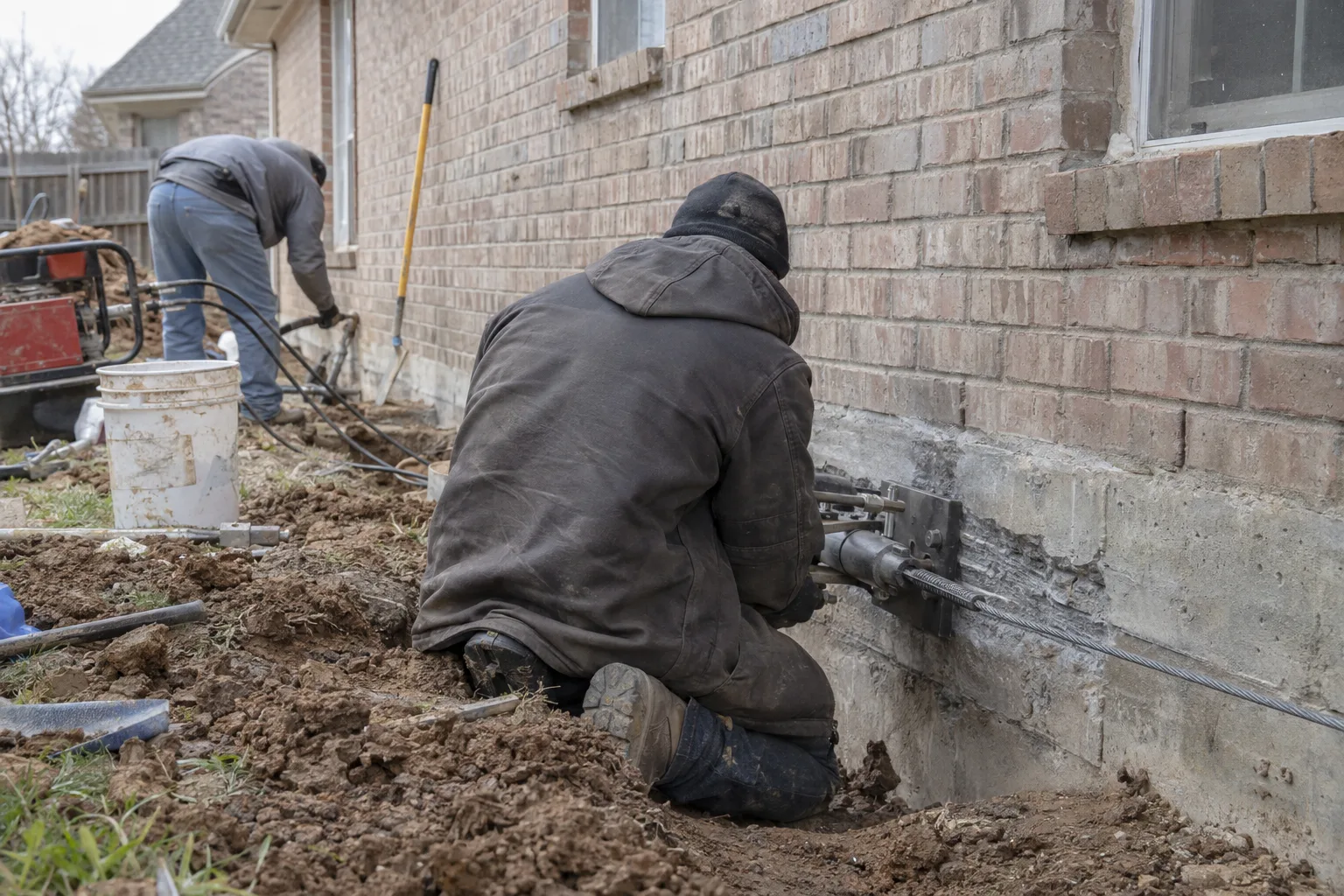
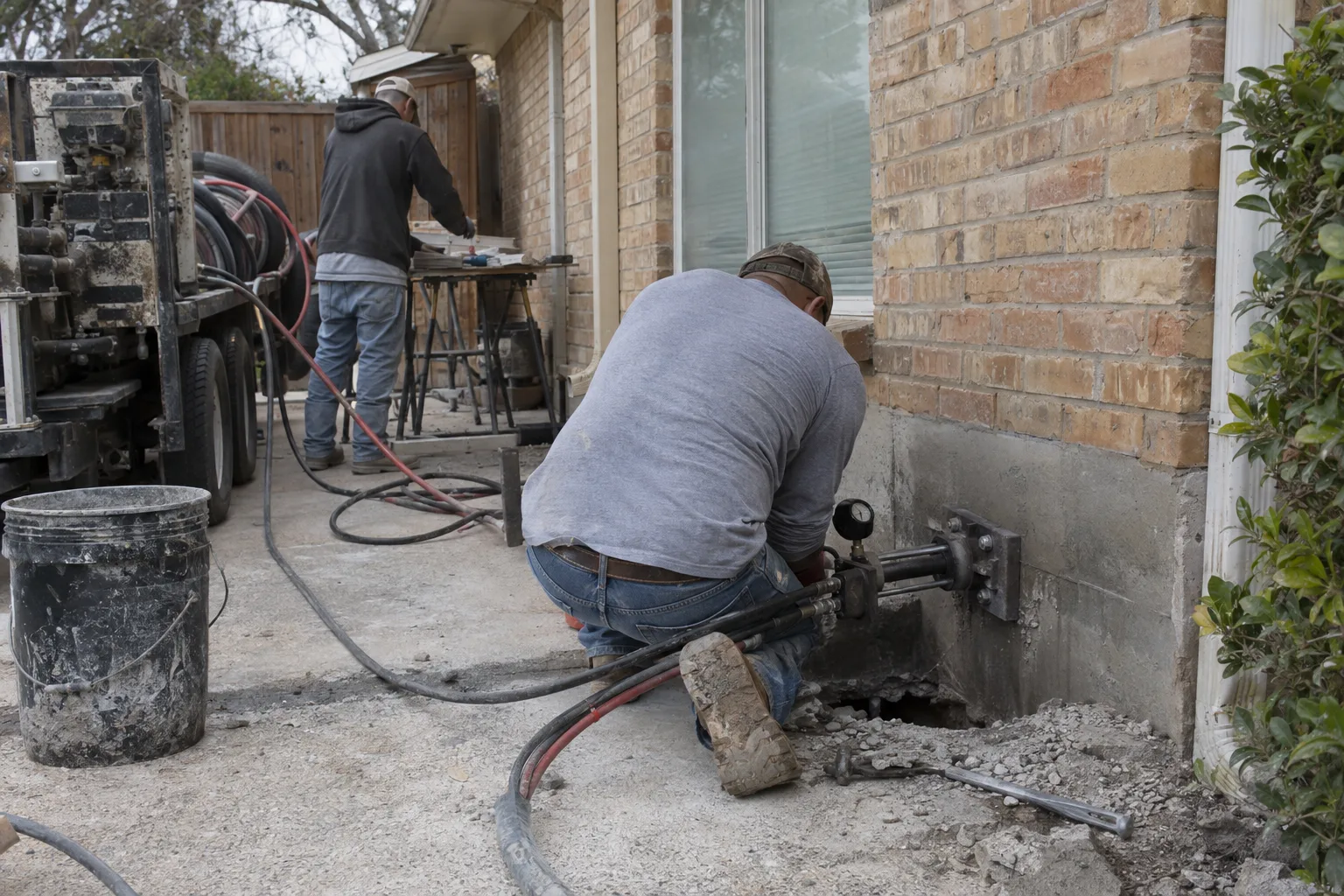
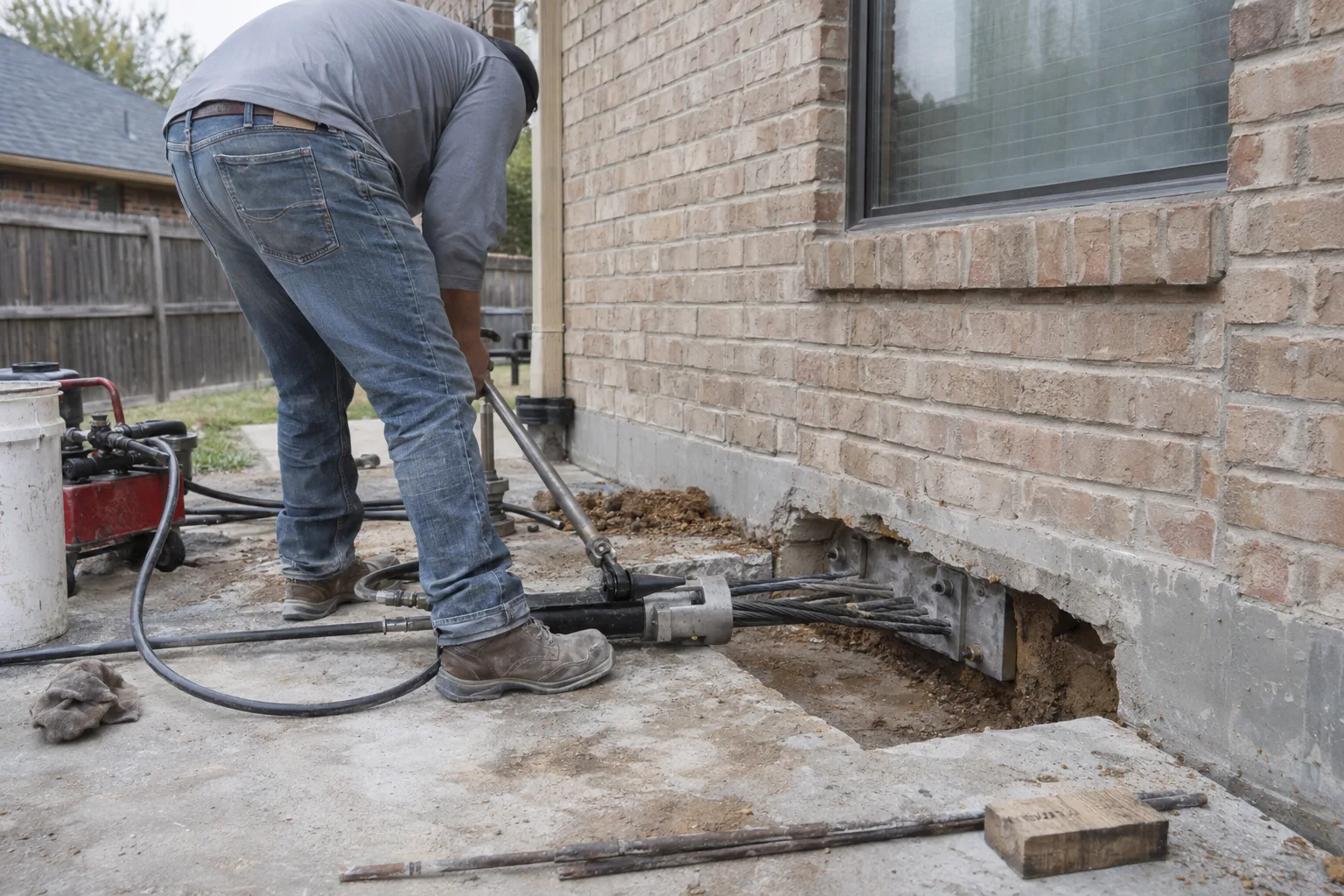
Here's what you're dealing with. Post-tension cables - the high-strength steel strands tensioned inside your concrete slab - work as a system. One severed cable reduces the load capacity in that zone. It does not automatically mean structural failure. What it does mean is that the situation needs to be assessed, documented, and repaired by someone who knows PT systems specifically.
Step-by-step guidance starts before we're on-site - so the first hour protects your claim.
What a Cable Strike Inside a Slab Actually Means for Your Home Right Now
A cut post-tension cable is serious - but your slab is not about to collapse.
The next hour matters more than most homeowners realize. What gets documented, what gets said to the contractor, and what does or does not happen to that slab before an assessment is done - all of that shapes your options going forward. Including who pays.
Why Dallas Has More Slab Penetration Accidents Than Most Cities - Cast Iron, Root Damage, and Dense PT Slabs
Dallas has the exact combination of conditions that makes cable strikes during plumbing work unusually common.
Here's what most homeowners don't realize about Dallas plumbing. A large portion of Dallas homes built before 1990 - including much of East Dallas, Garland, Mesquite, Irving, and older sections of Grand Prairie - were plumbed with cast iron drain lines. Cast iron drain lines have a service life of roughly 50 to 70 years. That means thousands of Dallas homes are in active pipe-failure territory right now.
Making things worse: Live oak and Bradford pear trees are planted throughout these same neighborhoods. Their roots aggressively infiltrate underground drain lines, forcing repeat plumbing repair work - and repeat slab penetration - across the same properties, sometimes every few years.
That slab penetration is the problem. Dallas's housing stock also sits on Blackland Prairie clay soil - one of the most expansive soil types in North America - which is precisely why post-tension slabs became the dominant construction method here starting in the 1970s. The result is a city where the homes most likely to need plumbing repairs under the slab are the same homes most likely to have post-tension cables running through it.
Cast iron drain line replacement - the process of accessing and replacing deteriorated cast iron pipe beneath a concrete slab - is the most frequent context in which post-tension cable strikes occur across the Dallas-Fort Worth area. This is not unusual. It happens regularly. And when it does, the homeowner is almost never prepared.
GPR, Contractor Responsibility, and the Documentation That Determines What Happens Next
What the plumber did or didn't do before drilling is the first question that shapes everything.
Before any slab penetration, the standard of care in a post-tensioned slab environment is a GPR pre-drilling protocol - the use of Ground Penetrating Radar to locate cable positions before a core drill or saw blade touches the concrete. When this step is skipped, cable strikes become significantly more likely.
Your first job is to find out whether GPR was used. Here is how to work through the first hour.
Step 1: Stop the Job
Ask the plumber to stop all work immediately. Do not allow any further drilling, cutting, or excavation near the damaged area. The site condition at the moment of discovery is evidence. Changes to that site - intentional or not - reduce your options.
Step 2: Document Before Anything Is Moved
Take photographs of everything visible. The cut location. The exposed concrete. Any cable ends showing through the slab. The plumber's equipment. The area around the work zone. Date and time stamps matter. If you have a newer smartphone, the metadata in each photo captures this automatically. Take more photos than you think you need.
Step 3: Ask the Plumber Directly
You need a clear answer to one question: Was GPR scanning done before drilling began? Ask it plainly. Write down the answer - including who said it and when. If the plumber says yes, ask to see the GPR scan report. If no GPR was used, that is a significant data point for contractor liability (Texas).
Under Texas law, a contractor who damages a structural component of a home during the course of their work may be liable for the cost of restoration. The Texas Residential Construction Liability Act (RCLA) - state legislation that governs how construction defect and contractor damage claims are handled - may apply depending on the specifics. Documentation of the event, the work order, and the absence of a GPR pre-drilling protocol is what establishes that liability in writing.
Step 4: Do Not Allow an On-Site Repair Attempt
A plumber is not qualified to repair a post-tension cable. Neither is a general contractor. Mid-span cable severance - a cut that occurs between the two anchor ends of a cable rather than at the hardware itself - requires a specific repair approach that depends on the slab depth, cable tension zone, and anchor condition. An improvised fix can cause greater structural compromise than leaving the cable as-is until a proper assessment is done.
Step 5: Call a Post-Tension Specialist
Before you call anyone else - including your insurance company - speak with a post-tension cable repair specialist. The assessment determines what actually happened and what the documented repair path is. That documentation is what an insurance adjuster, a Texas RCLA claim, or a contractor negotiation will require.
Mid-Job Discovery, Post-Project Find, and Inspector-Flagged Damage - Three Situations, Three Starting Points
Where you are in the timeline changes what you should do first.
The Mid-Job Discovery
The plumber is still on-site. Work has stopped. This is the best-case timing. You have direct access to the contractor, the documentation is fresh, and no one has had time to minimize or mischaracterize what happened. Follow the five steps above in order. Do not let the plumber leave before you have their written acknowledgment of the incident - even a text message or email from them describing what occurred is useful.
The Post-Project Find
The plumbing work is finished. The plumber is gone. You discovered the problem yourself - a pop at the slab edge, a crack that opened up, a home inspector's report, or a floor that suddenly feels different. This is a harder position, but not an unrecoverable one. Document everything visible now. Pull together the plumber's invoice, the work order, and any communication from the job. A post-tension specialist can assess the current condition and produce a report that speaks to probable cause and repair scope. That report becomes your baseline for any claim.
The Inspector-Flagged Find
A home inspector - during a pre-sale or routine inspection - noted a suspected cable issue near a past plumbing repair. This is a research-and-decision moment, not a crisis moment. The slab has already adapted to the cable's condition. The question now is severity and repair options. A proper assessment will determine whether the damage is a mid-span cable severance, a pocket-only issue, or something that affects the broader slab zone. That answer shapes cost and timeline.
What to Ask the Contractor Before Anyone Attempts a Fix on Your Slab
The questions you ask in the first conversation protect every conversation that comes after.
I've walked through this situation with enough Dallas homeowners to know what gets missed in the first hour. The instinct is to solve the problem fast and get the renovation back on track. That instinct can cost you significantly if it means letting the wrong person attempt a repair before the situation is properly documented.
Here are the questions that matter most:
Was GPR performed before drilling? This is non-negotiable. No GPR record means the standard of care was not followed.
What is the exact location of the strike? Ask the plumber to mark or photograph where the core drill or saw contacted the cable. Mid-span cable severance has different repair implications than damage near an anchor pocket.
Who authorized the slab penetration plan? On a PT slab, someone should have been responsible for identifying cable locations before any tool touched concrete. Find out who was assigned that responsibility.
Do you carry general liability insurance? A contractor who damages a structural component of your home has caused property damage. Their liability policy may cover the repair. Get the carrier name and policy number before anyone leaves the site.
Will you stay engaged until this is resolved? Some contractors will want to hand this off quickly. Getting a written commitment to remain in contact through the repair process - even informally via text - protects you.
The experience that matters here is not just knowing how to repair a post-tension cable. It's knowing what the first hour's decisions mean for the second conversation, the insurance call, and the contractor negotiation that follows.
If Any of These Conditions Are Present, Stop All Work and Call Before the Site Changes
Some situations require a specialist on-site before anything else happens.
Call a post-tension cable repair specialist immediately - before the plumber leaves, before you call your insurer, before anyone does anything further to the slab - if any of the following are true:
The cable end is visibly protruding or has retracted into the slab. This indicates the cable was under significant tension at the moment of severance and may have transferred load abruptly to adjacent cables.
You hear or see fresh cracking in the slab surface near the work area. New cracks in the hours immediately after a cable strike suggest active stress redistribution.
The area in question is beneath a load-bearing wall, a staircase, or a structural column. These zones carry concentrated loads and a compromised cable in that location warrants faster intervention.
The plumber has told you that multiple cores were drilled near the same area. More than one penetration in a small zone increases the probability of more than one cable affected.
You are mid-renovation with structural elements already exposed or removed. An open wall or removed flooring near the strike zone changes the access picture and the structural context entirely.
None of these conditions mean your home is unsafe to occupy. They mean the documentation and assessment process should start today - not next week.
Cut-Cable Response Across East Dallas, Garland, Mesquite, Irving, and Greater DFW
We respond to post-tension cable strikes throughout the Dallas-Fort Worth metro.
We serve homeowners and contractors across Dallas, Irving, Garland, Mesquite, Grand Prairie, Carrollton, Richardson, Farmers Branch, Duncanville, DeSoto, Cedar Hill, Rowlett, Addison, University Park, and Highland Park. Beyond the core city, we cover Fort Worth, Arlington, Plano, Frisco, McKinney, Denton, Allen, Lewisville, Flower Mound, Rockwall, Wylie, Waxahachie, Waco, and all surrounding communities.
Call Now - We'll Walk You Through the First Hour Before We Arrive
You don't have to wait for a truck to get guidance - we start the moment you call.
Reach us at info@posttensioncablerepair.com or use the contact form on this site. Tell us what happened, where the work was being done, and whether the plumber is still on-site. We will walk you through what to document, what to say, and what not to allow before we get there.
The first hour after a cable strike is the most important hour in this entire process. The right decisions now protect your home, your claim, and your options going forward. Call before the site changes.