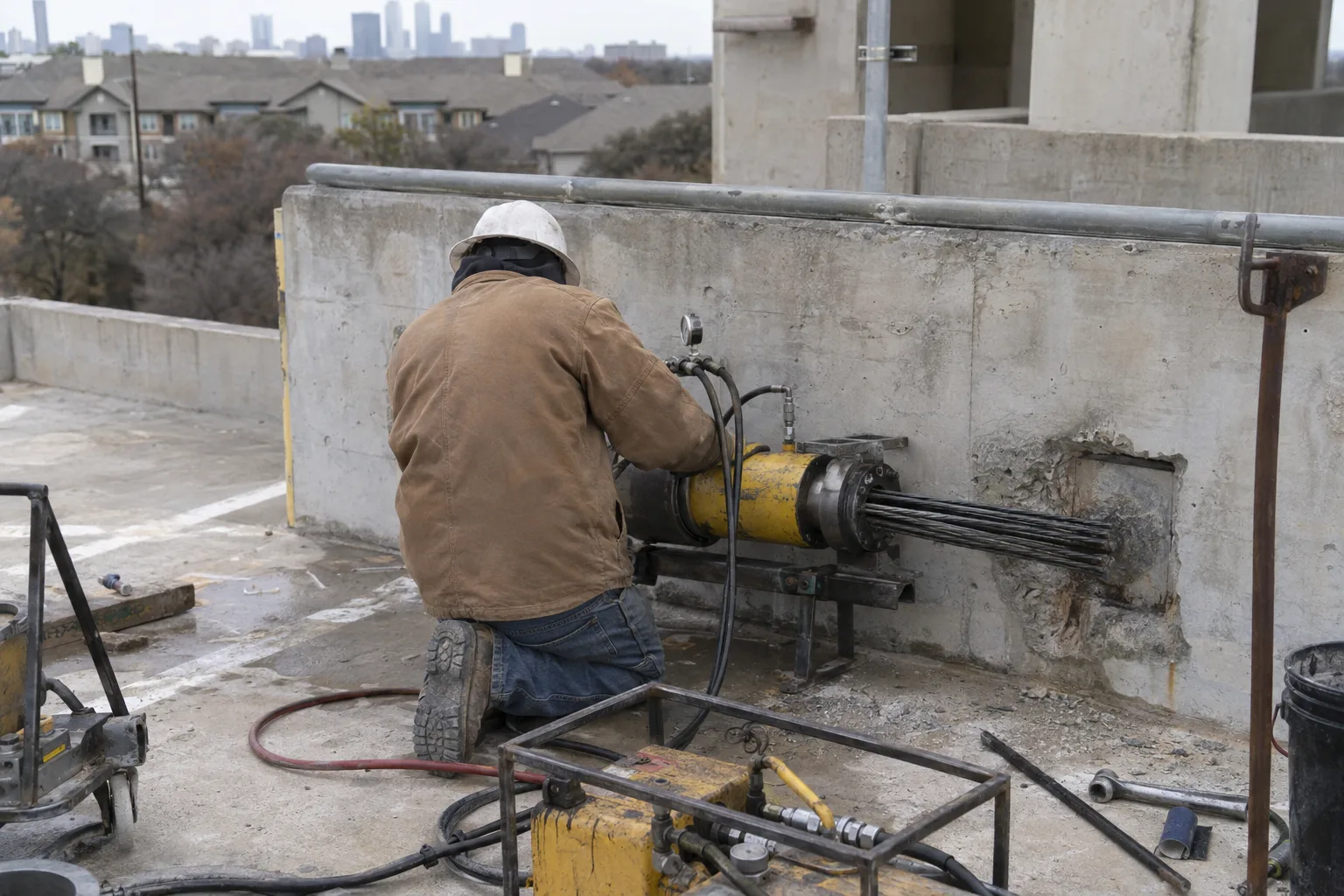
Commercial slabs in Arlington
Arlington sits between Dallas and Fort Worth, and much of its building stock is retail, office and multi-use, from the Entertainment District near AT&T Stadium and Globe Life Field outward. Big footprints mean long slab edges, and every anchor pocket along those edges takes summer sun, hard rain and daily traffic.
Ground-level slabs here sit on expansive North Texas clay that swells when wet and shrinks when dry. On a long commercial slab that movement is rarely even from end to end. Parking decks have a different exposure: water and tire traffic from above, so the edge hardware needs close attention.
Pockets along one edge were often grouted on the same day with the same mix. When one fails on a long Arlington retail edge, checking its neighbors can change the whole scope of the repair.
- Common slabs
- Retail centers, office buildings, parking decks and multi-unit properties, mostly with unbonded single-strand tendons.
- A common first clue
- An orange-brown rust streak below a slab-edge pocket, sometimes with loose or missing grout.
- What to send
- The engineer's report if there is one, slab or PT shop drawings, access constraints and the tenant occupancy schedule.
What we fix in Arlington
- Dallas-Fort Worth Post-Tension Cable RepairBroken, cut, corroded and slack cables in DFW slabs
- Emergency Post-Tension Cable Repair in the DFW MetroplexUrgent cable failures after a break or construction accident
- Broken Post-Tension Cable Repair: What Dallas Homeowners Need to KnowHow broken cables are diagnosed and repaired
- A Plumber Cut Your Post-Tension CableTendons severed during plumbing or slab work
- Snapped Post-Tension Cable RepairCables that broke under tension, often with a loud pop
- Post-Tension Cable ReplacementFull strand replacement with ASTM A416 steel
- Post-Tension Cable Inspection & Condition AssessmentDocumented check of pockets, anchors and cables
- Post-Tension Pocket and Anchor Repair in the DFW AreaMissing grout pockets and corroded anchor hardware
- Post-Tension Cable Re-Stressing and Re-TensioningRestoring tension to cables that have lost it
- Commercial Post-Tension Cable RepairCable repair for commercial and multi-unit slabs
- Post-Tension Cable Insurance Claim DocumentationPhotos and findings for insurance correspondence
- Fort Worth Post-Tension Cable RepairPT cable repair across Fort Worth and Tarrant County
Arlington questions
How much does post tension cable repair cost for a commercial building in Arlington, TX?
Pricing is set per project after we review your slab details. The main cost drivers are tendon count, damage location and site access. A tendon is the steel cable running through the slab. A mid-span break needs more concrete removal than an edge pocket repair. Parking decks may also need stall closures and staged work. Email drawings and any engineer's report to get a scoped quote.
What happens during a commercial tendon repair, step by step?
The repair runs in three stages: locate, repair and verify. First, we trace the damaged tendon to its anchors using drawings and scanning. Next, we cut out the damaged length and splice in new strand. Replacement strand meets ASTM A416, the standard spec for PT steel. A hydraulic jack then pulls the tendon to its design force. We confirm that force with the jack gauge and measured strand stretch. Finally, we cut the cable tail and grout the pocket.
Why hire one specialist for the cable and the anchor pockets?
One specialist closes the gap between tendon work and edge hardware work. Cable damage and pocket failures are often linked on the same slab. A cracked grout pocket lets water reach the anchorage, which is the hardware holding the cable tight. That water can then travel along the strand. Post-tension cable work, including pockets and anchors, is our whole focus. We also check neighboring pockets, since one edge was often grouted on one day.
rust stain running down the edge of our parking deck slab, is a cable broken?
Not always. Rust streaks often point to a failed grout pocket. A grout pocket is the filled recess at the slab edge covering the anchor. A stain centered under one pocket usually traces to that anchor. A stain trailing from a crack farther in can mean water moved along the cable. Arlington parking decks take water from above, so edge stains need a prompt look. We remove loose grout to check whether the strand still holds.
Does our engineer of record need to approve the repair plan?
Often, yes, especially on larger commercial buildings. The engineer of record is the licensed engineer who designed or reviews the slab. Stressing force is set from their design values or the slab drawings. Stressing means pulling the cable tight with a hydraulic jack. Include their contact details and any report in your first email. That helps align our repair scope with their review.
Can tenants keep operating while the slab is repaired?
Yes, closures usually stay limited to the immediate work zone. Most tendon repairs are localized to a small section of slab. Stressing needs a clear safety zone behind the hydraulic jack. On a parking deck, that may mean closing a few stalls. On a retail edge, foot traffic may route around one storefront. Send tenant hours and peak traffic times so we can plan around operations. ```json <script type="application/ld+json"> { "@context": "https://schema.org", "@type": "FAQPage", "mainEntity": [ { "@type": "Question", "name": "How much does post tension cable repair cost for a commercial building in Arlington, TX?", "acceptedAnswer": { "@type": "Answer", "text": "Pricing is set per project after we review your slab details. The main cost drivers are tendon count, damage location and site access. A tendon is the steel cable running through the slab. A mid-span break needs more concrete removal than an edge pocket repair. Parking decks may also need stall closures and staged work. Email drawings and any engineer's report to get a scoped quote." } }, { "@type": "Question", "name": "What happens during a commercial tendon repair, step by step?", "acceptedAnswer": { "@type": "Answer", "text": "The repair runs in three stages: locate, repair and verify. First, we trace the damaged tendon to its anchors using drawings and scanning. Next, we cut out the damaged length and splice in new strand. Replacement strand meets ASTM A416, the standard spec for PT steel. A hydraulic jack then pulls the tendon to its design force. We confirm that force with the jack gauge and measured strand stretch. Finally, we cut the cable tail and grout the pocket." } }, { "@type": "Question", "name": "Why hire one specialist for the cable and the anchor pockets?", "acceptedAnswer": { "@type": "Answer", "text": "One specialist closes the gap between tendon work and edge hardware work. Cable damage and pocket failures are often linked on the same slab. A cracked grout pocket lets water reach the anchorage, which is the hardware holding the cable tight. That water can then travel along the strand. Post-tension cable work, including pockets and anchors, is our whole focus. We also check neighboring pockets, since one edge was often grouted on one day." } }, { "@type": "Question", "name": "rust stain running down the edge of our parking deck slab, is a cable broken?", "acceptedAnswer": { "@type": "Answer", "text": "Not always. Rust streaks often point to a failed grout pocket. A grout pocket is the filled recess at the slab edge covering the anchor. A stain centered under one pocket usually traces to that anchor. A stain trailing from a crack farther in can mean water moved along the cable. Arlington parking decks take water from above, so edge stains need a prompt look. We remove loose grout to check whether the strand still holds." } }, { "@type": "Question", "name": "Does our engineer of record need to approve the repair plan?", "acceptedAnswer": { "@type": "Answer", "text": "Often, yes, especially on larger commercial buildings. The engineer of record is the licensed engineer who designed or reviews the slab. Stressing force is set from their design values or the slab drawings. Stressing means pulling the cable tight with a hydraulic jack. Include their contact details and any report in your first email. That helps align our repair scope with their review." } }, { "@type": "Question", "name": "Can tenants keep operating while the slab is repaired?", "acceptedAnswer": { "@type": "Answer", "text": "Yes, closures usually stay limited to the immediate work zone. Most tendon repairs are localized to a small section of slab. Stressing needs a clear safety zone behind the hydraulic jack. On a parking deck, that may mean closing a few stalls. On a retail edge, foot traffic may route around one storefront. Send tenant hours and peak traffic times so we can plan around operations." } } ] } </script> ```