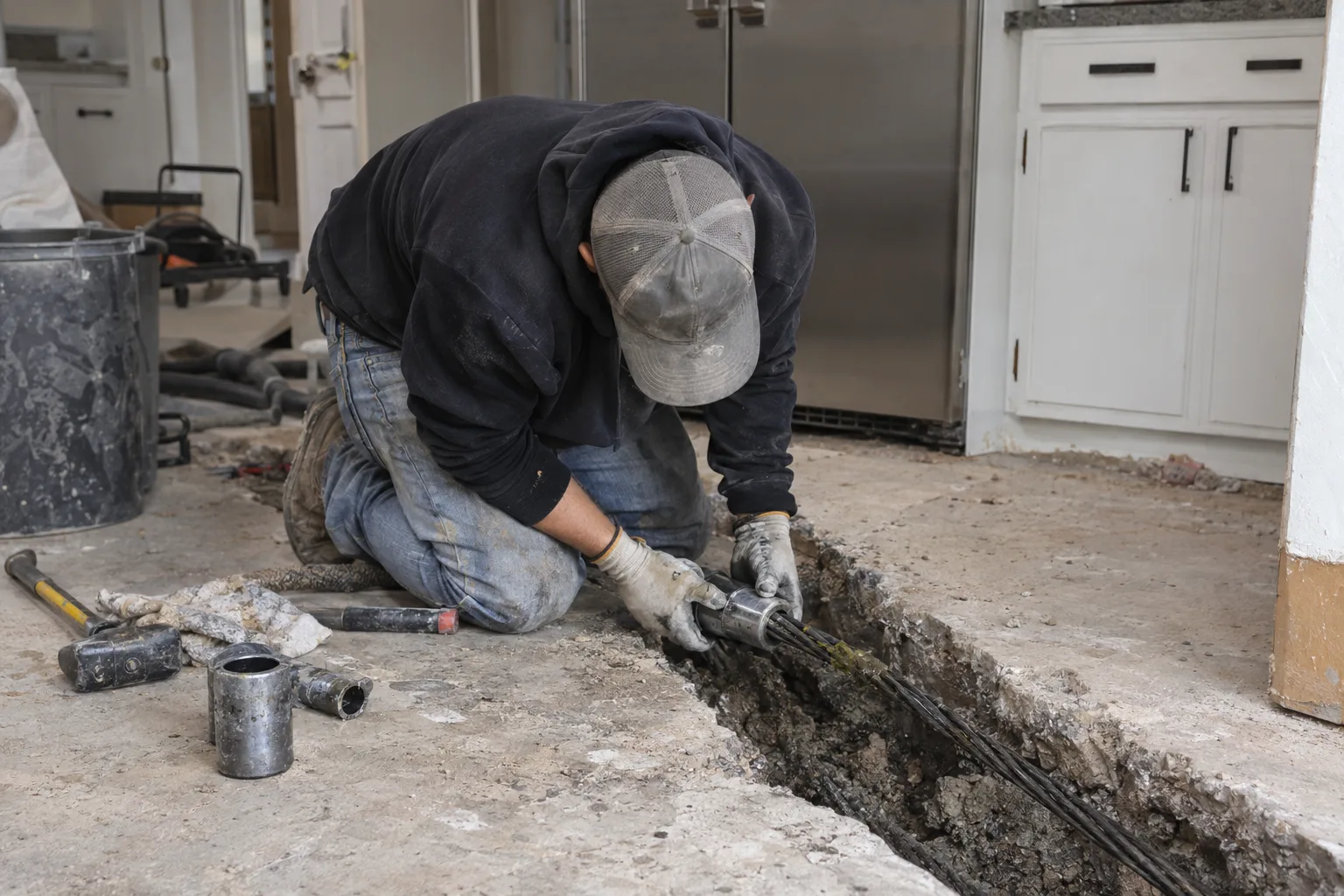
Post-tension slabs in McKinney
McKinney grew fast in both directions, with subdivisions spreading north up US-75 and south toward the Sam Rayburn Tollway. Builders here use post-tension slabs because much of Collin County sits on Blackland Prairie clay, a sticky soil that swells when wet and shrinks when dry.
Many of these homes are now getting their first remodels, which means more crews cutting trenches for new drains and drilling for floor outlets. A typical call starts with a sink moved to an island and a saw blade that catches steel partway across the kitchen floor. The trench already cut often gives the access needed for the repair.
Not sure if your home has a post-tension slab? Check the concrete near your garage door. Many Texas builders stamp a post-tension warning there.
- Common slabs
- Unbonded single-strand tendons: half-inch, seven-wire steel strand inside a greased plastic sleeve, pulled tight after the concrete cures.
- What we see most
- Cables cut mid-remodel while trenching for a relocated drain line or drilling for a new floor outlet.
- Local soil
- Blackland Prairie clay under an open trench can dry out fast in a North Texas August, so the trench should be closed promptly once the tendon is re-stressed.
What we fix in McKinney
- Dallas-Fort Worth Post-Tension Cable RepairBroken, cut, corroded and slack cables in DFW slabs
- Emergency Post-Tension Cable Repair in the DFW MetroplexUrgent cable failures after a break or construction accident
- Broken Post-Tension Cable Repair: What Dallas Homeowners Need to KnowHow broken cables are diagnosed and repaired
- A Plumber Cut Your Post-Tension CableTendons severed during plumbing or slab work
- Snapped Post-Tension Cable RepairCables that broke under tension, often with a loud pop
- Post-Tension Cable ReplacementFull strand replacement with ASTM A416 steel
- Post-Tension Cable Inspection & Condition AssessmentDocumented check of pockets, anchors and cables
- Post-Tension Pocket and Anchor Repair in the DFW AreaMissing grout pockets and corroded anchor hardware
- Post-Tension Cable Re-Stressing and Re-TensioningRestoring tension to cables that have lost it
- Commercial Post-Tension Cable RepairCable repair for commercial and multi-unit slabs
- Post-Tension Cable Insurance Claim DocumentationPhotos and findings for insurance correspondence
- Fort Worth Post-Tension Cable RepairPT cable repair across Fort Worth and Tarrant County
McKinney questions
My crew just hit a cable in the slab. What do we stop doing right now?
Stop all cutting, drilling, patching, and flooring work near the cut. Leave the exposed cable and its sleeve as they are. The sleeve is the greased plastic tube around each steel cable. Keep people away from the slab edge in line with the cut. A cut tendon, or slab cable, can push its end out at the edge. Then email info@posttensioncablerepair.com with a photo and the cut's location.
Is splicing a cut cable cheaper than replacing the whole thing?
A splice usually costs less than a full cable replacement. A splice joins new strand to the old cable with a metal coupler. Replacement runs new strand edge to edge, which means more steel and labor. In many McKinney kitchens, the plumber's open trench already gives us access. That can mean less new demolition. Your final price depends on what we find at the cut and slab edge.
How soon can my remodel crew start back up after the cable is fixed?
Your crew can restart after three steps. First, the tendon, or steel slab cable, is re-stressed with a hydraulic jack. Next, the jack's gauge force must agree with how far the cable stretched. Last, the trench gets repair-grade concrete, which needs cure time before flooring. Collin County clay dries fast under an open trench, so we close it promptly.
Can't my plumber just patch the concrete over the cut cable?
No, a concrete patch won't restore the force a cut cable carried. The cable must be spliced or replaced, then re-stressed to working force. That takes a calibrated jack and a coupler rated for the cable's full load. A coupler is the metal fitting that joins new strand to old. We run a dedicated service for cables cut during plumbing or remodel work. That's how post tension cable repair in McKinney gets you one clear plan.
What if the cut cable snapped back inside the slab?
Often, it can still be fixed, but the loose end's position sets the plan. When tension releases, a cut tendon can pull back inside its plastic sleeve. A tendon is the steel cable that holds the slab together. If enough sound cable remains, we splice and re-stress it. If not, or if the live-end anchor is damaged, we replace it. The live-end anchor is the edge fitting where the cable locks tight.
Should we get a GPR scan before the plumber cuts the next drain line in McKinney?
Yes, scan the slab before any new cut or drill hole. GPR, or ground penetrating radar, shows where cables sit inside the concrete. Any hole drilled or cut through the slab is called a slab penetration. Many remodels along US-75 and SH-121 need several new drains or outlets. Each one is another chance to hit a cable. Mapping cables first protects the rest of your project and your schedule. ```json { "@context": "https://schema.org", "@type": "FAQPage", "@id": "https://posttensioncablerepair.com/dallas-fort-worth-post-tension-cable-repair-mckinney/#faq", "mainEntity": [ { "@type": "Question", "name": "My crew just hit a cable in the slab. What do we stop doing right now?", "acceptedAnswer": { "@type": "Answer", "text": "Stop all cutting, drilling, patching, and flooring work near the cut. Leave the exposed cable and its sleeve as they are. The sleeve is the greased plastic tube around each steel cable. Keep people away from the slab edge in line with the cut. A cut tendon, or slab cable, can push its end out at the edge. Then email info@posttensioncablerepair.com with a photo and the cut's location." } }, { "@type": "Question", "name": "Is splicing a cut cable cheaper than replacing the whole thing?", "acceptedAnswer": { "@type": "Answer", "text": "A splice usually costs less than a full cable replacement. A splice joins new strand to the old cable with a metal coupler. Replacement runs new strand edge to edge, which means more steel and labor. In many McKinney kitchens, the plumber's open trench already gives us access. That can mean less new demolition. Your final price depends on what we find at the cut and slab edge." } }, { "@type": "Question", "name": "How soon can my remodel crew start back up after the cable is fixed?", "acceptedAnswer": { "@type": "Answer", "text": "Your crew can restart after three steps. First, the tendon, or steel slab cable, is re-stressed with a hydraulic jack. Next, the jack's gauge force must agree with how far the cable stretched. Last, the trench gets repair-grade concrete, which needs cure time before flooring. Collin County clay dries fast under an open trench, so we close it promptly." } }, { "@type": "Question", "name": "Can't my plumber just patch the concrete over the cut cable?", "acceptedAnswer": { "@type": "Answer", "text": "No, a concrete patch won't restore the force a cut cable carried. The cable must be spliced or replaced, then re-stressed to working force. That takes a calibrated jack and a coupler rated for the cable's full load. A coupler is the metal fitting that joins new strand to old. We run a dedicated service for cables cut during plumbing or remodel work. That's how post tension cable repair in McKinney gets you one clear plan." } }, { "@type": "Question", "name": "What if the cut cable snapped back inside the slab?", "acceptedAnswer": { "@type": "Answer", "text": "Often, it can still be fixed, but the loose end's position sets the plan. When tension releases, a cut tendon can pull back inside its plastic sleeve. A tendon is the steel cable that holds the slab together. If enough sound cable remains, we splice and re-stress it. If not, or if the live-end anchor is damaged, we replace it. The live-end anchor is the edge fitting where the cable locks tight." } }, { "@type": "Question", "name": "Should we get a GPR scan before the plumber cuts the next drain line in McKinney?", "acceptedAnswer": { "@type": "Answer", "text": "Yes, scan the slab before any new cut or drill hole. GPR, or ground penetrating radar, shows where cables sit inside the concrete. Any hole drilled or cut through the slab is called a slab penetration. Many remodels along US-75 and SH-121 need several new drains or outlets. Each one is another chance to hit a cable. Mapping cables first protects the rest of your project and your schedule." } } ] } ```