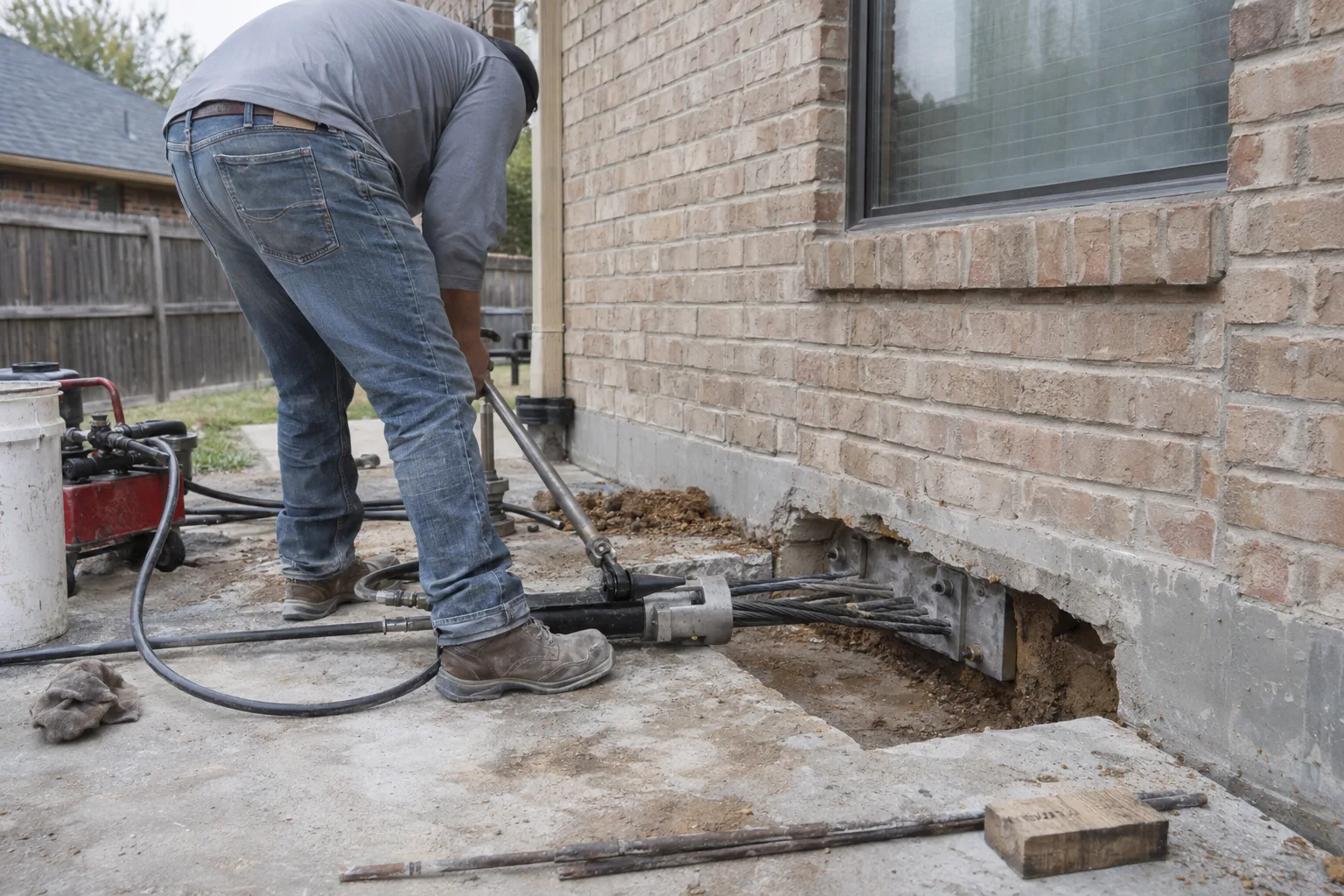
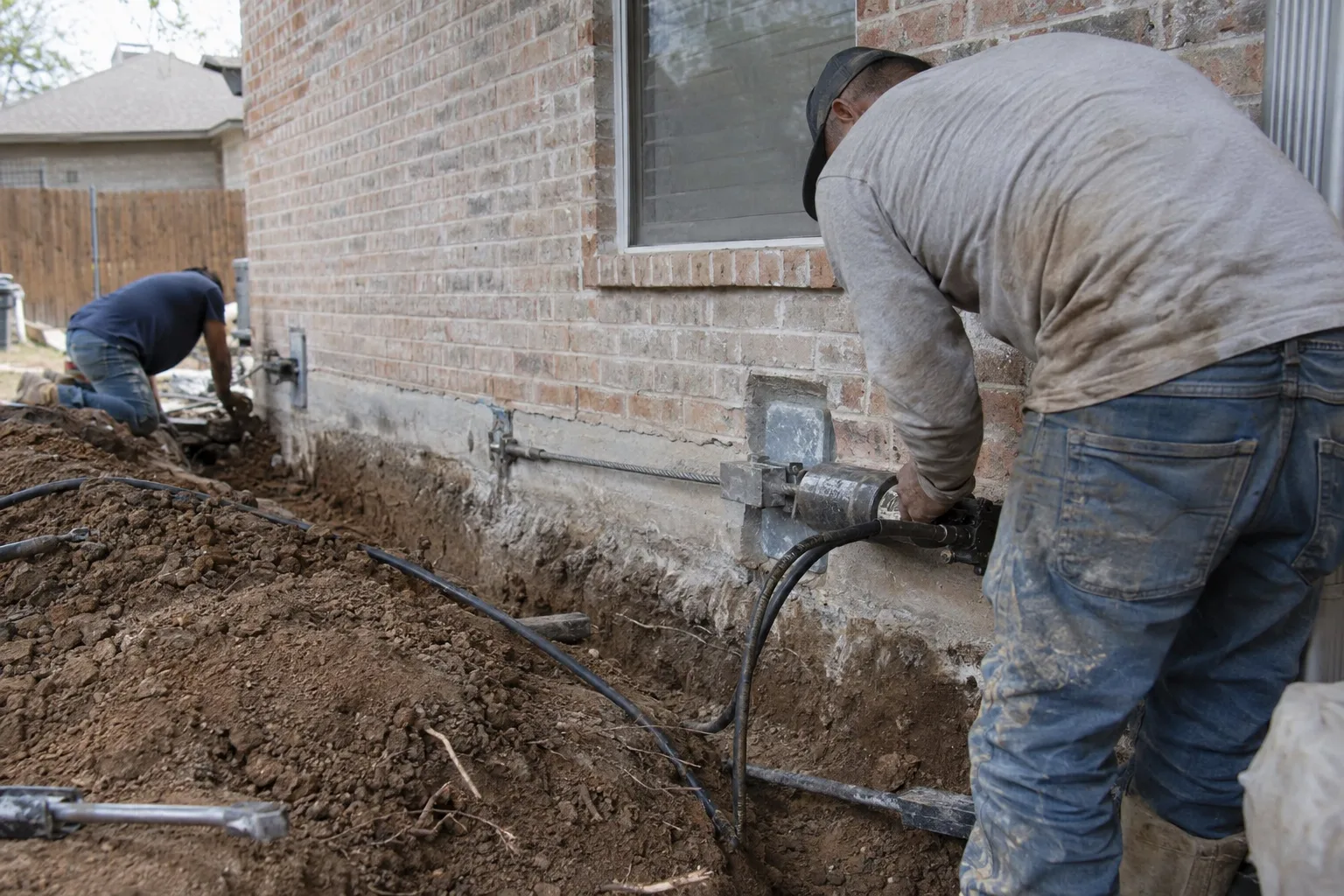
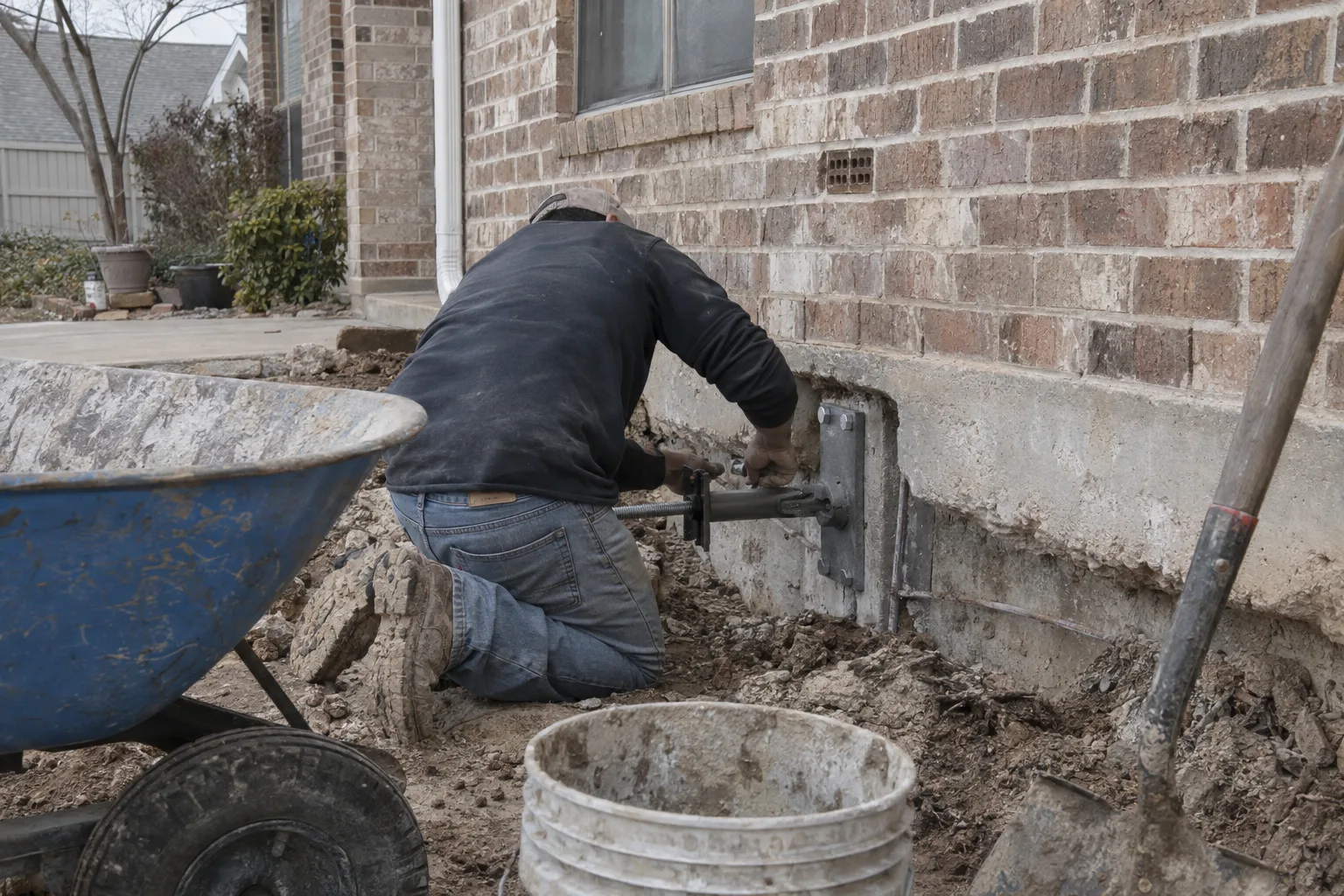
A cable can be repaired when the strand itself failed at a locatable mid-span point and the anchor hardware at both ends is still structurally intact. Replacement becomes the correct call when the anchor hardware has corroded, pulled through, or failed entirely - or when corrosion has spread far enough along the strand that a mid-point fix cannot restore adequate structural capacity. The five conditions that determine which path is right are failure location, anchor hardware condition, corrosion extent, cable age relative to service life, and soil history. Every one of those factors gets evaluated before any scope is agreed to.
What Makes a Cable Repairable - and What Makes Replacement the Correct Call
Post-tension cable repair and full replacement are not interchangeable - they address different levels of failure.
How DFW's Clay Soil Accelerates the Timeline Toward Replacement on Older Slabs
Dallas-Fort Worth's Blackland Prairie clay shortens effective cable service life - often by a decade or more.
Here's what most homeowners don't realize about DFW foundations: the Montmorillonite clay beneath most of this metro is among the most expansive soil in North America. It shrinks hard during drought and swells aggressively when rain returns. That cyclical movement loads and unloads PT cables hundreds of times over a slab's lifetime.
In stable soil environments, properly installed unbonded single-strand tendons - the standard PT system in Texas residential construction - can perform for 30 to 50 years. In DFW, that range compresses. Inner-ring Dallas neighborhoods, Irving, Garland, and Mesquite all have significant housing stock from the 1970s and 1980s. Those slabs are now 40 to 55 years old. At that age, with this soil, the question isn't always whether a cable can be repaired. It's whether repair is the right long-term investment given the age and condition of the adjacent cables running through the same slab.
That context shapes every recommendation made in this service area.
Anchor Hardware Gone, Corrosion Spread - How the Replacement Decision Gets Made in the Field
The replacement call is never made arbitrarily - it comes from what the slab actually shows once it's opened.
A call came in from a homeowner in Richardson - a 1984 construction, single-story home on a slab that had been showing diagonal cracks near the entry and stair-step cracking along the southeast corner. A structural engineer had already visited and noted a failed cable on the east elevation. When we opened the slab edge to access that cable, the live-end anchor - the hardware that the jack grabs to tension the strand - had corroded through completely. The pocket was open, never properly grouted after original installation, and water had been tracking along the cable sheath for years.
We checked the adjacent cables on that elevation. Two more showed visible strand corrosion at the pocket entry point. The cable that failed wasn't an isolated problem. It was the first one to go in a sequence that had been building since at least the mid-1990s.
The honest conversation with that homeowner wasn't "do you want repair or replacement?" It was: "Here's what we found. Here's what it means for the other cables on this elevation. Here's why replacement of these three tendons is the recommendation that actually solves your problem - and here's what repair-only would and wouldn't address."
We put that in writing before any work started.
The anchor hardware condition - specifically the state of the live end and dead end anchor components - is the single most decisive factor in the repair-vs.-replace determination. When those components have failed or corroded beyond tolerance, a mid-span repair cannot restore structural capacity to anything close to the original design load. Full tendon assembly replacement is the only path that actually works.
The Recommendation You Receive Is Based on Documented Criteria - Not Default Pricing
Every repair-or-replace recommendation comes with a written rationale - before any work begins.
The concern we hear most often from homeowners who've already called around is this: "I don't know if the company is recommending replacement because I actually need it, or because it costs more."
That's a fair question. And the only way to answer it honestly is to show your work.
Corrosion extent assessment - the evaluation of how far deterioration has spread along a cable or through the anchor system - drives the written justification on every job. When corrosion is confined to the failure point and the anchors are sound, repair is the documented recommendation. When anchor hardware condition rules out a mid-span fix, replacement is documented and explained in plain language.
You should know, specifically, what condition led to that call. We make sure you do.
The Decision Framework We Apply - Failure Location, Anchor Condition, Cable Age, Corrosion Extent
Five criteria. Evaluated in sequence. Documented before scope is agreed to.
This is the structured evaluation process used on every job - not a gut call, not a default to the more expensive option:
- Failure location: Mid-span failures with intact anchors at both ends favor repair. Failures at or near the anchor zone favor replacement.
- Anchor hardware condition: Live-end and dead-end hardware that has corroded, pulled through, or is mechanically unsound requires full tendon assembly replacement - a mid-span repair cannot compensate for failed anchors.
- Cable age and service life: Cables approaching or past their effective service life in DFW's clay soil conditions are evaluated for adjacent cable risk, not just the failed strand.
- Corrosion extent assessment: Corrosion confined to the break point differs from corrosion that has tracked along the sheath. Extent determines whether structural capacity can be restored through repair.
- Soil history: Slabs in areas with documented severe drought exposure - the 2011 drought hit much of DFW's older neighborhoods hard - carry higher adjacent-cable risk. That context is factored in.
When a Repair Will Hold for Decades and When It Won't Last Five Years
The outcome depends on what condition the slab was actually in - not just the cable that failed.
A mid-span repair on a cable with intact anchor hardware, minimal corrosion confined to the break point, and a slab under 25 years old in a neighborhood with reasonable soil stability? That repair can last the remaining life of the slab. Done correctly with proper tension verification, it restores the cable's contribution to slab tensile strength - the structural capacity the original design required.
Different conditions produce different results.
A repair performed on a cable where the anchor pocket was never grouted, corrosion has tracked six inches along the sheath, and the adjacent cables on that elevation are already showing pocket deterioration - that repair might hold for a few years. But it doesn't address the system-level problem.
Decision framework - the structured evaluation process using documented criteria - matters most in this second scenario. That's where the homeowner needs a straight answer about what repair can and cannot accomplish, so they can make a real decision instead of deferring one.
Three factors accelerate the timeline toward replacement specifically in DFW: open or improperly grouted pockets (extremely common in 1970s-1990s construction), drought-driven soil cycling that loads cables beyond design assumptions, and anchor hardware that was undersized or improperly installed originally. When more than one of those applies, replacement of the affected tendons is typically the more durable investment.
Repair-or-Replace Assessments Across DFW - From Established Dallas Neighborhoods to Frisco, Prosper, and Celina
We assess PT cable conditions across the full DFW footprint - aging inner-ring slabs and newer construction alike.
Established neighborhoods across Dallas, Irving, Garland, Mesquite, Richardson, and Grand Prairie. Suburban communities including Plano, Allen, McKinney, Frisco, and Prosper. Outlying areas from Weatherford and Mineral Wells to Waco, Sherman, and Greenville. The cable age, soil history, and anchor conditions vary significantly across this geography - and those differences shape every recommendation.
Get an Honest Assessment - We'll Tell You Which One Fits and Explain Why
The right answer for your slab is documented, explained, and yours to review before any scope begins.
If you've already received a recommendation and you want to understand the basis for it - or if you haven't received one yet and you need a starting point - reach out to Post Tension Cable Repair. We cover the greater Dallas-Fort Worth Metroplex and surrounding areas. Email us at info@posttensioncablerepair.com. Tell us what you know about your cable condition. We'll take it from there.